Love Letters & River Currents:
Collective Becomings in the Classroom
A RIOT FOR JUSTICE
by Sibling Cotravelers
&
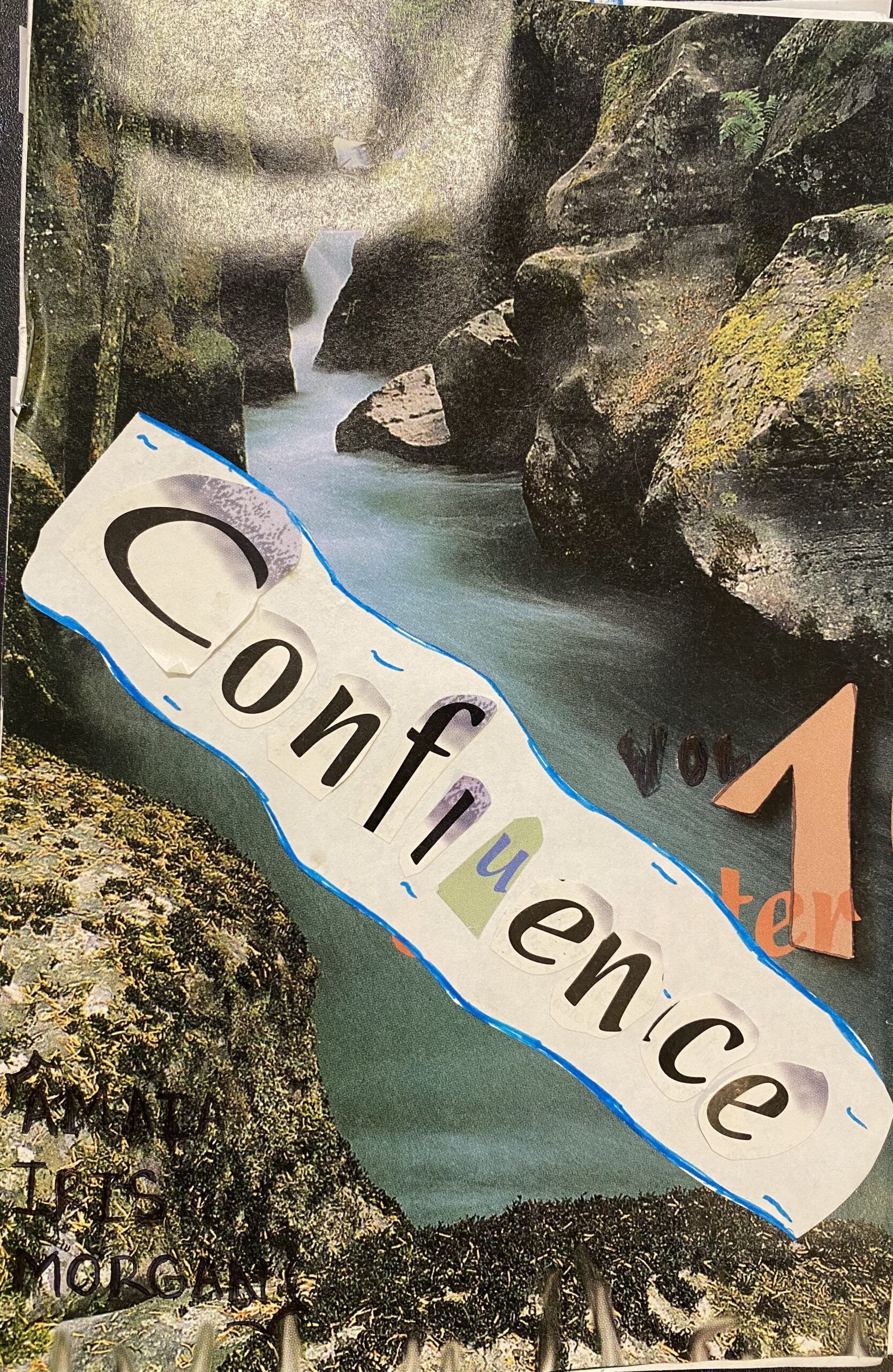
CONFLUENCE
by Amaia Mayberry, Iris Anderson, and Morgan Hamilton
This article is a part of AGITATE! Vol 6 (2026): Pedagogy of Hope
Can we stitch hope in the midst of hopelessness? The two co-authored zines that we present here embody such a search—the first in the form of a love letter by Sibling Cotravelers, and the second in the form of a confluence created by Amaia Mayberry, Iris Anderson, and Morgan Hamilton. These works emerged in Richa Nagar’s seminar on Feminist Ways of Knowing (Fall 2024) and her Introduction to Study of Gender, Women, and Sexuality (Spring 2025), where students embraced journeys of unlearning and relearning that focused not only on grappling with concepts, frameworks, processes, and events but also with the foundational modes through which we learn and evolve in and as a community. Participants explored intersectional critiques of systems and institutions and examined the mutually constitutive nature of sociopolitical, ecological, and epistemic justice, while engaging anti-disciplinary approaches to anticolonial, anti-racist, and anti-caste struggles. In interweaving systemic analysis with intimate stories and creating a space for theorizing-doing-feeling, students embraced a poetics and praxis of collectivity and movement. Questioning the promise of mastery that many classrooms seek to instill, they grappled with the structures and processes that shape systemic violences and multiple and contradictory positionalities, as well as the joys and hardships that define collective imagination of justice.
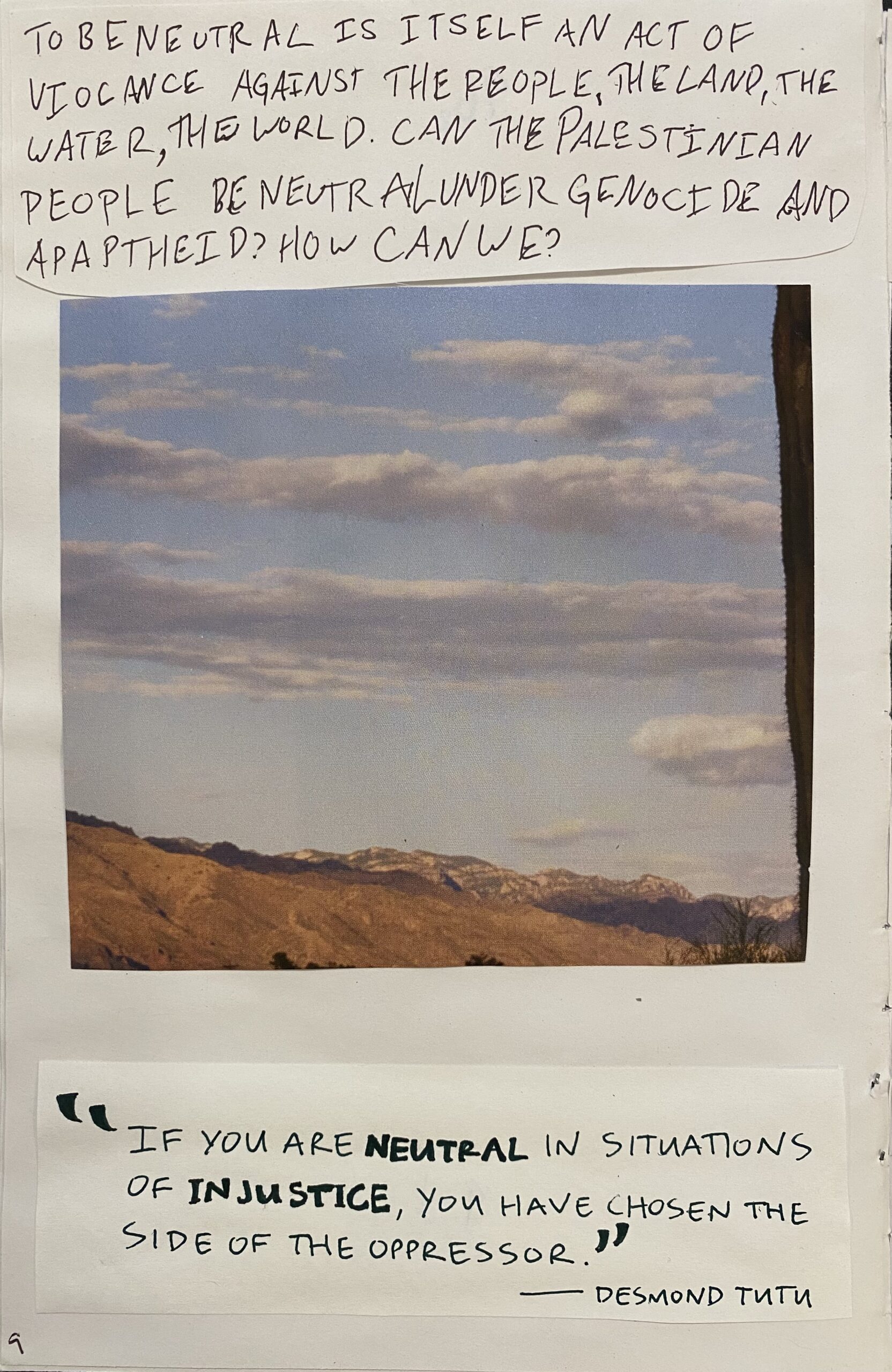
In A Riot for Justice, Sibling Cotravelers—Alliyah Logan, Ariel Tourmaline, Devan Marino, Kerry LaRose, Jeanette Falotico, Maya Martinez Diers, and Richa Nagar—come together as participants in Feminist Ways of Knowing to stitch what they call “a love letter—to ourselves, to each other, and to you.” Recognizing a “feeling of falseness in trying to build a collective within the structures of academia,” they seek to cultivate a classroom-based community that can overcome this falseness “through collaboration, collective grieving, and sharing knowledge in a way that challenges the sterilization or elimination of emotion, embodied truths, and non-academic forms of knowledge from our education.” Their zine becomes “an embodied experience that cannot be encompassed in mere words . . . . an avenue through which Smithies, who are so entrenched in our academic studies, might have an outlet to express more than what a strict one-track academic culture tends to allow for . . . an opportunity to reconnect, to regroup, and to be human among humans and more-than-humans with courage—especially during a time that does not extend patience or consideration to humanness, let alone show sensitivity to more-than-humanness (except when we want to consume “it”).”
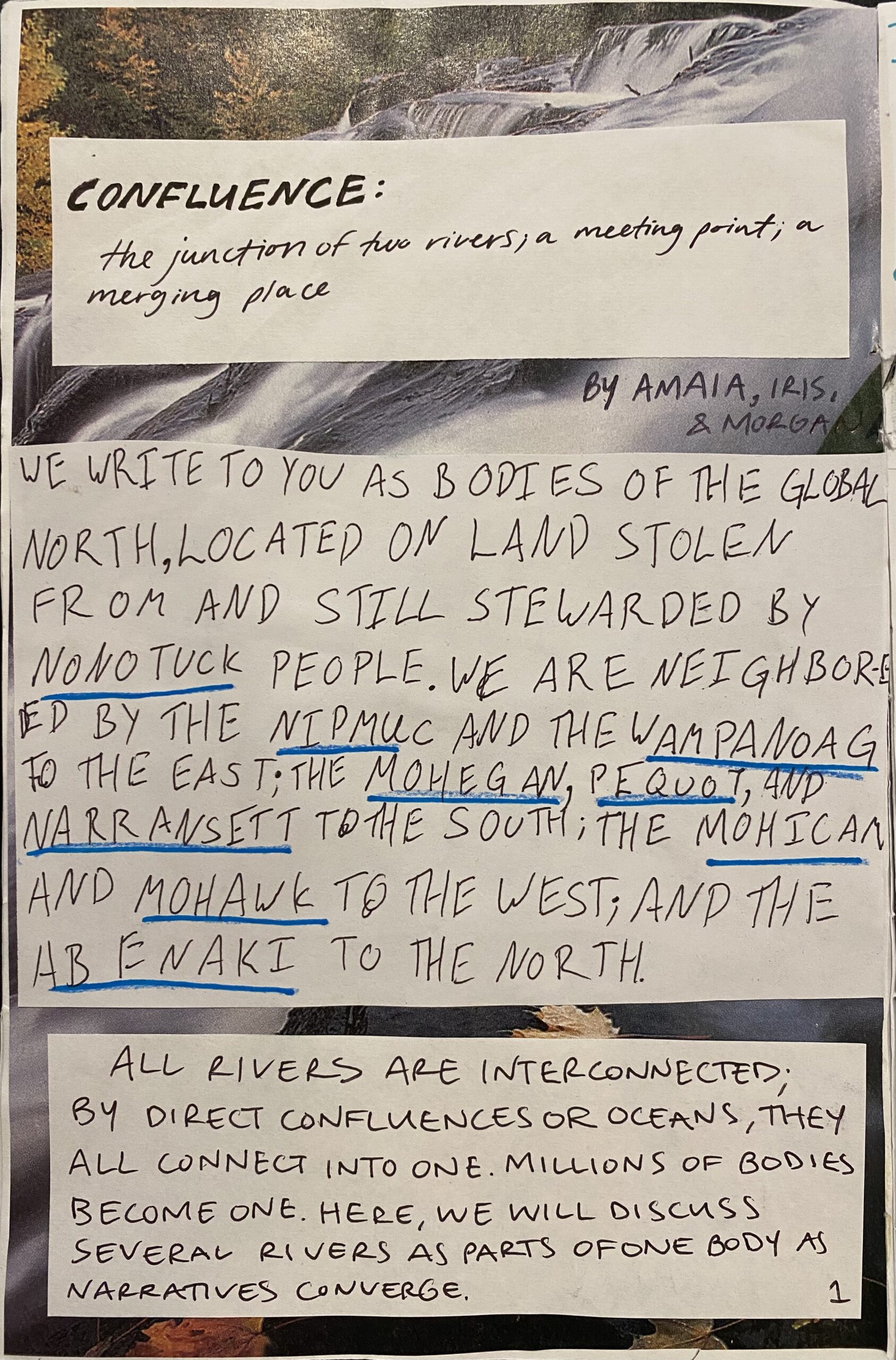
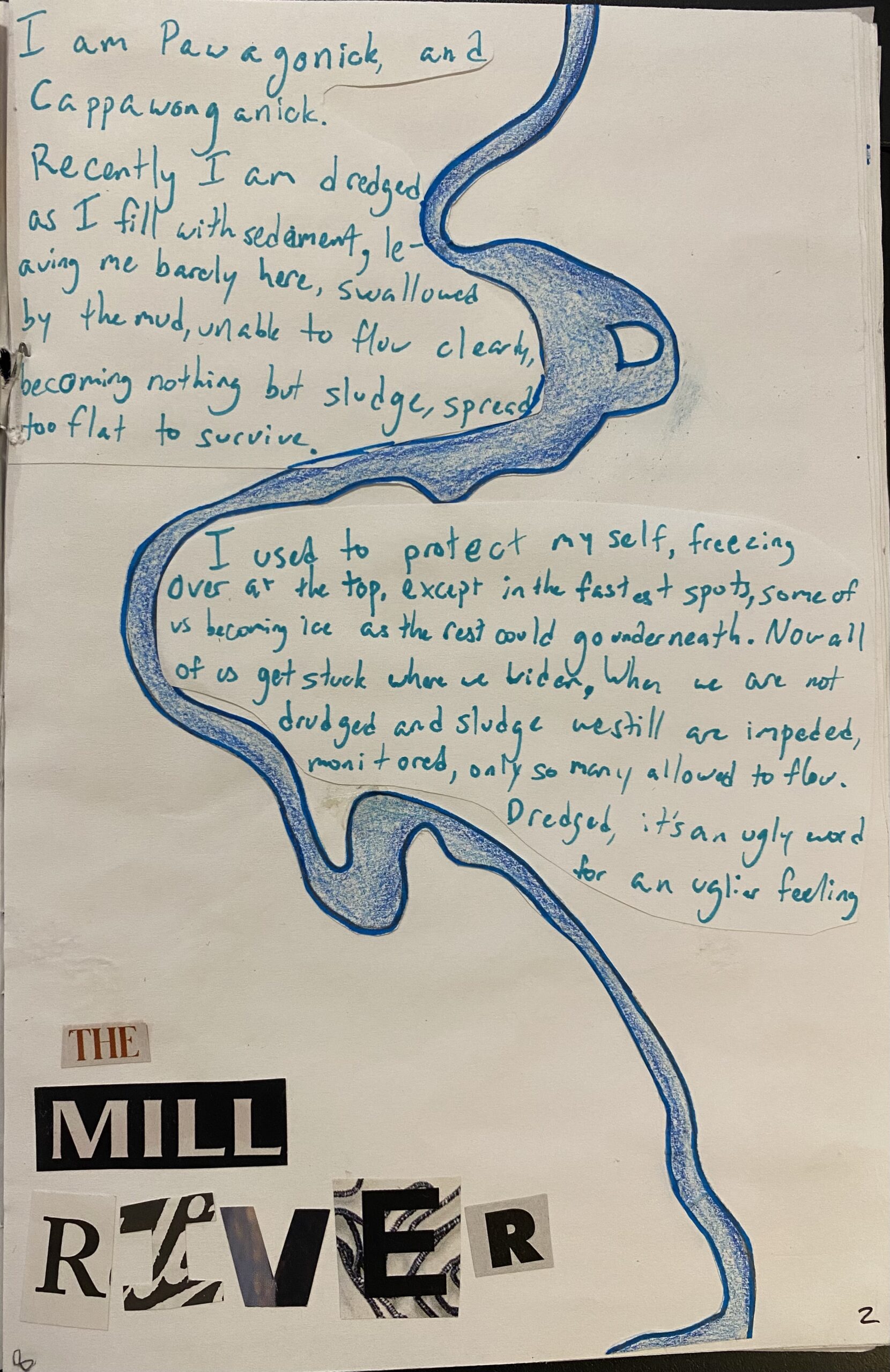
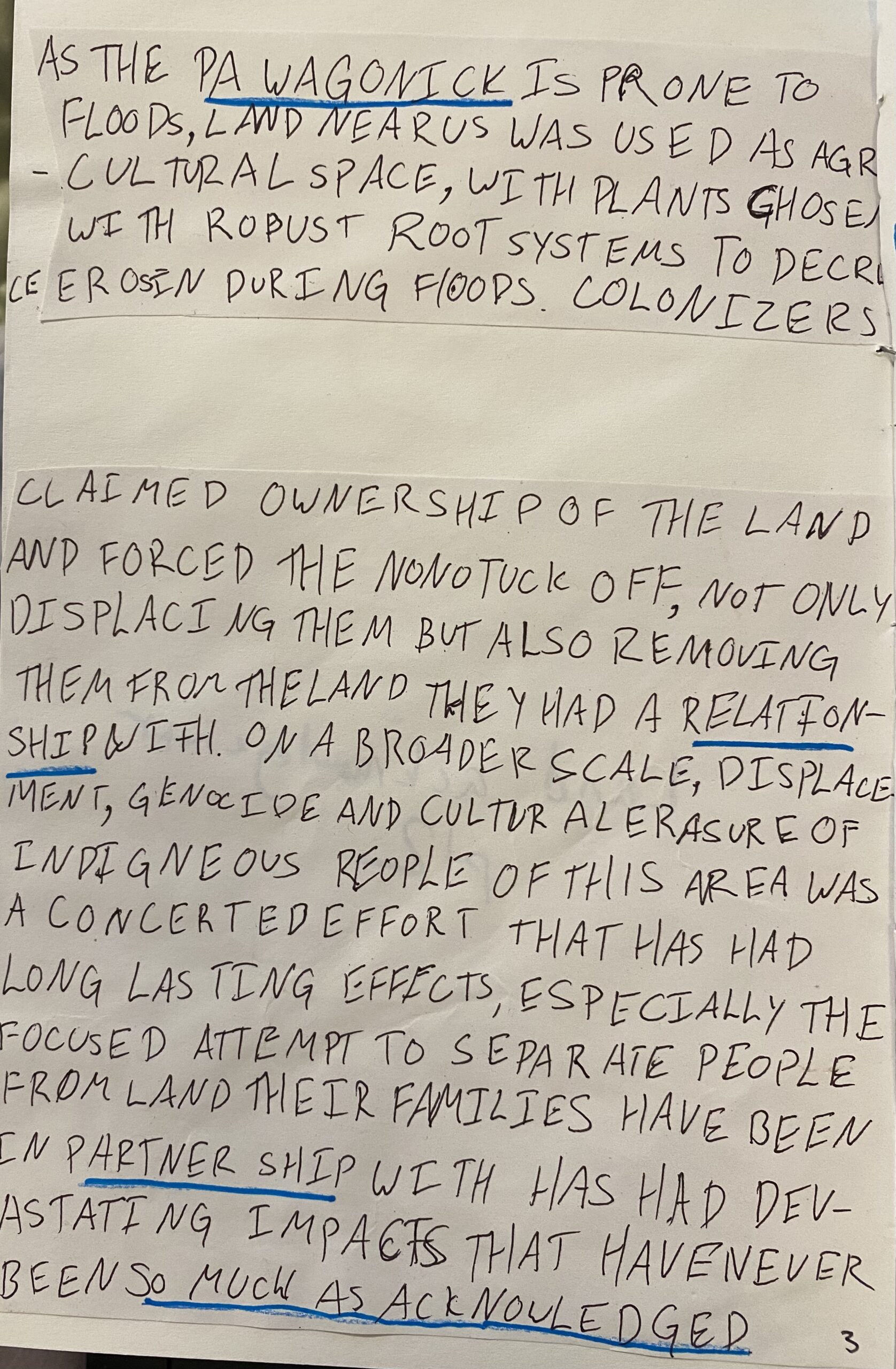
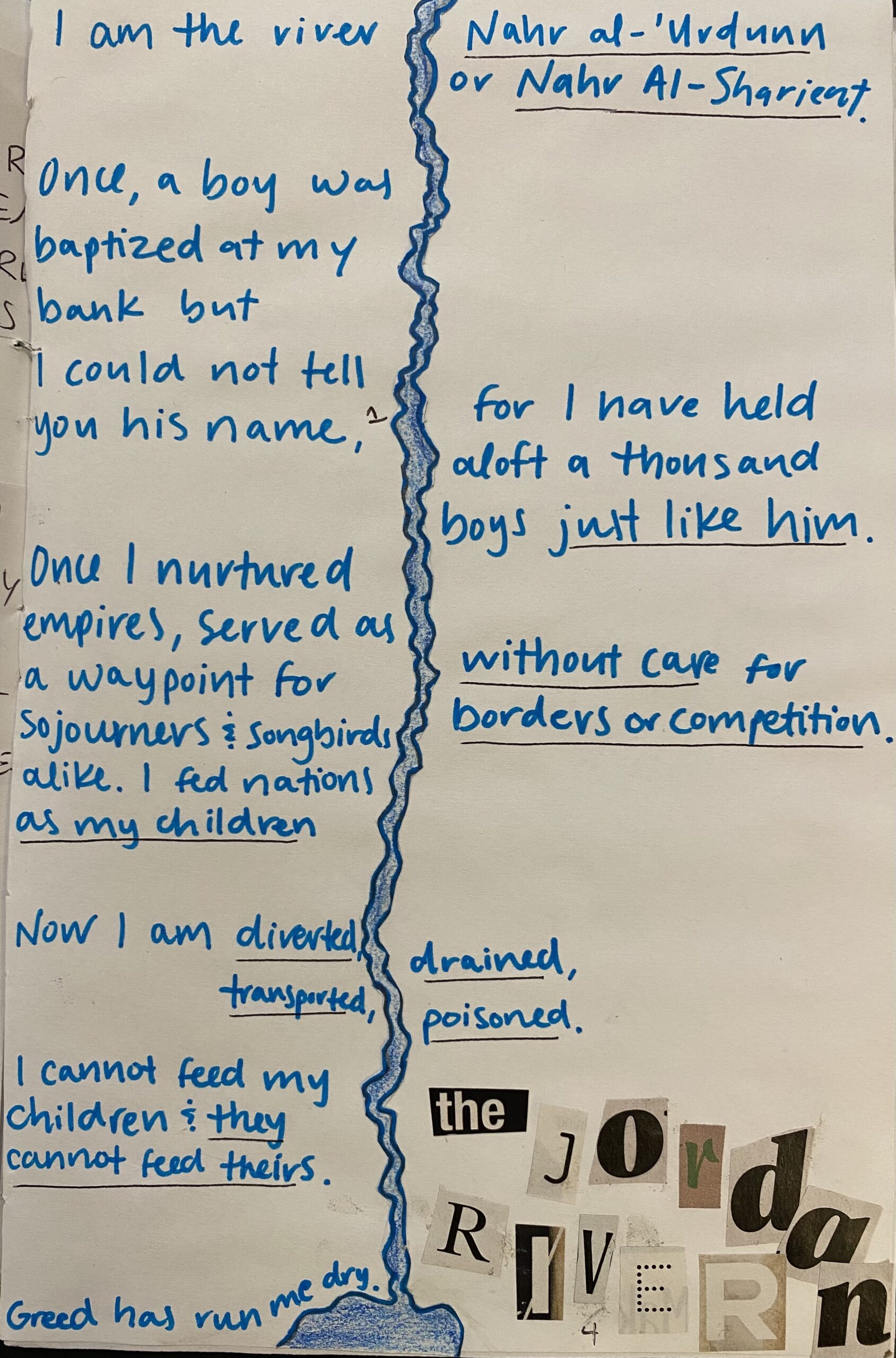
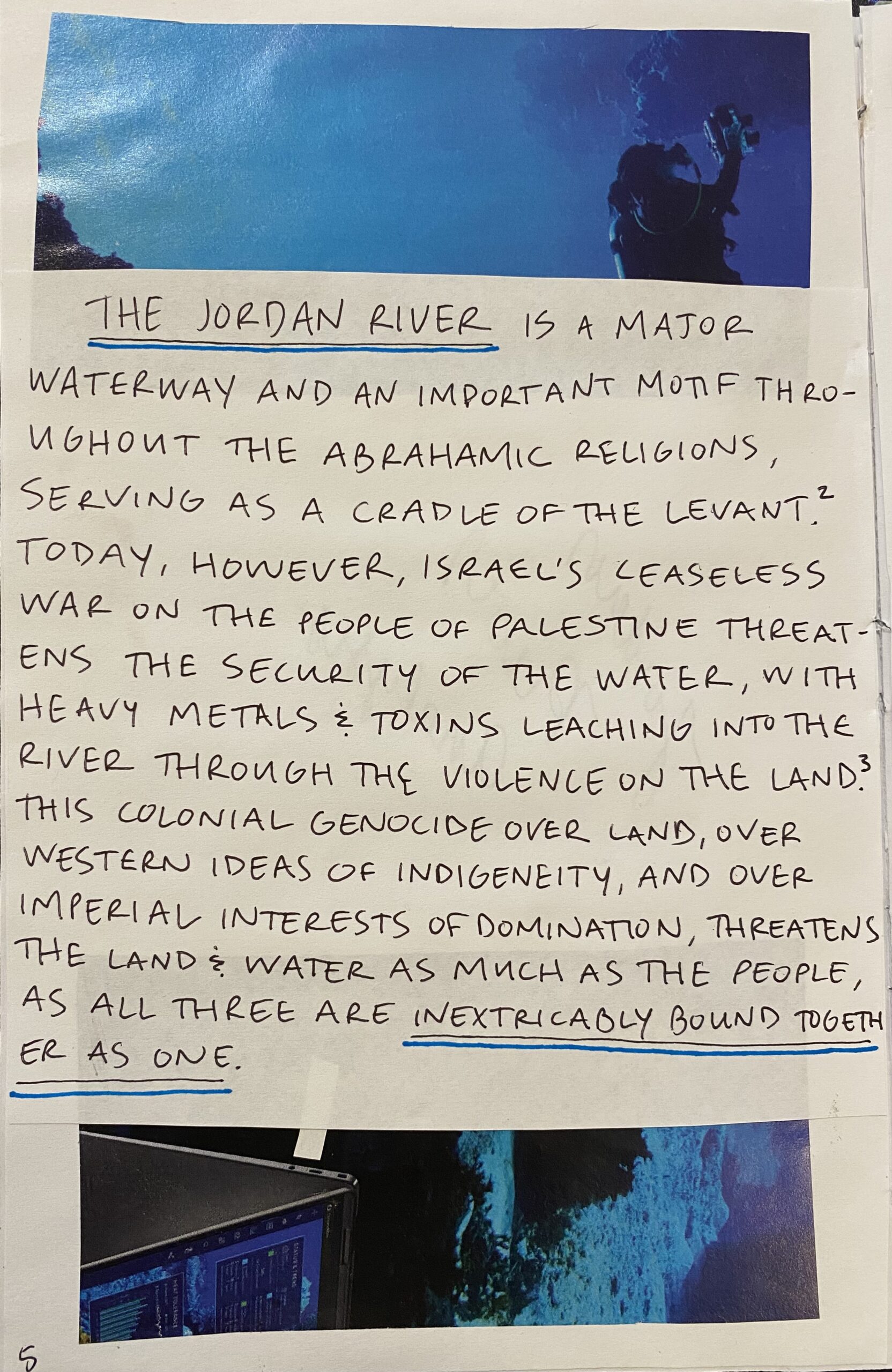
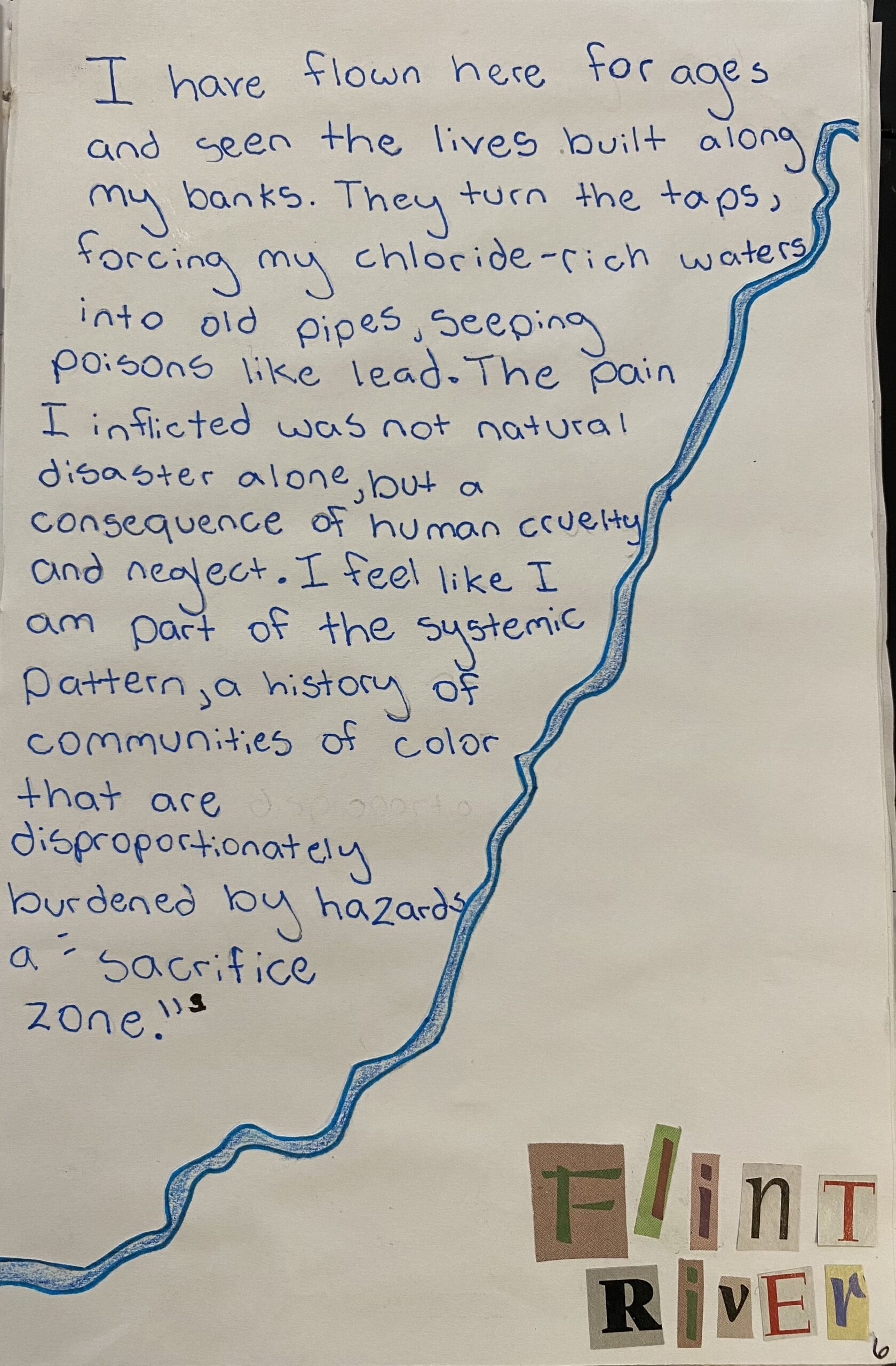
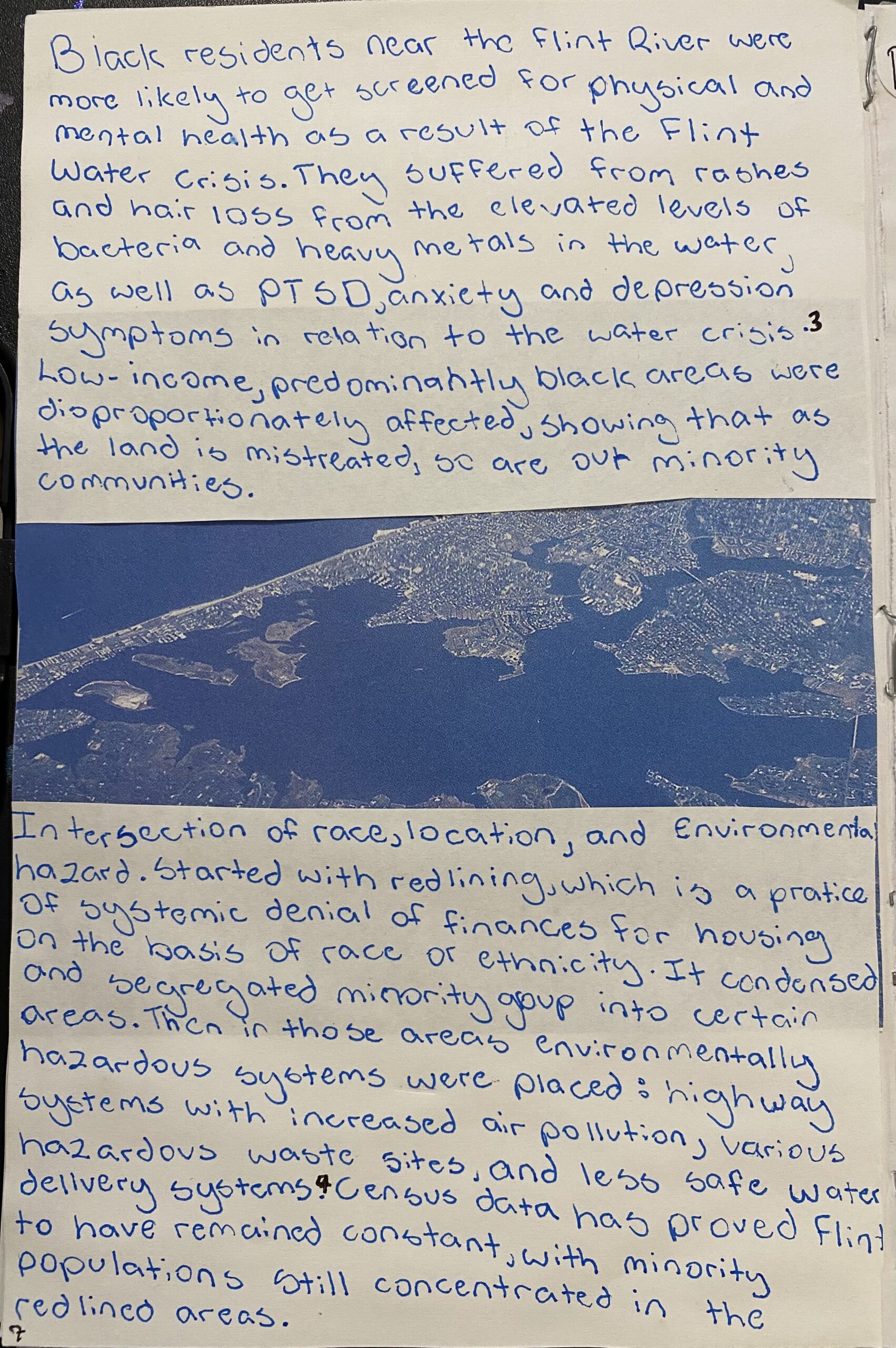
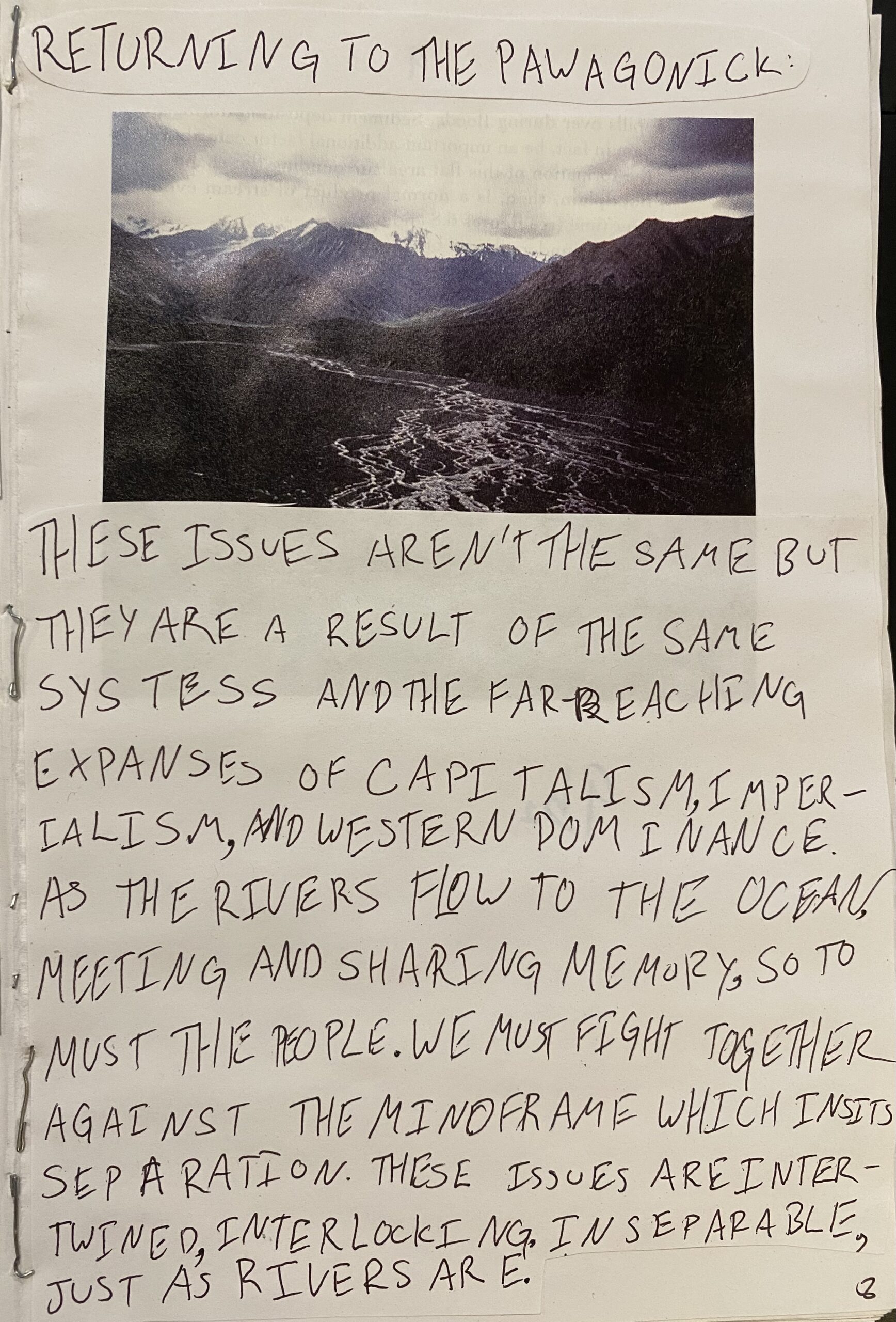
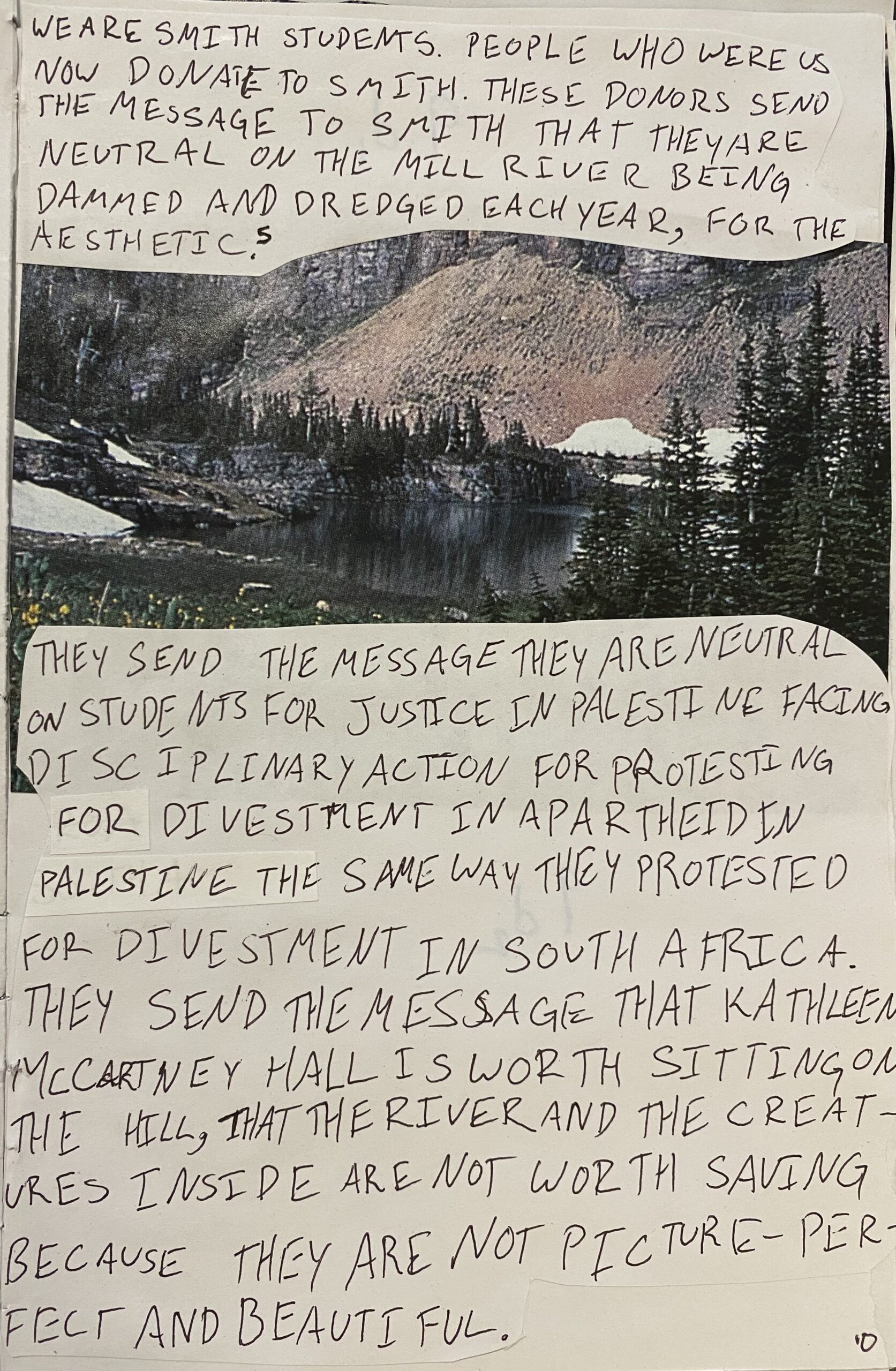
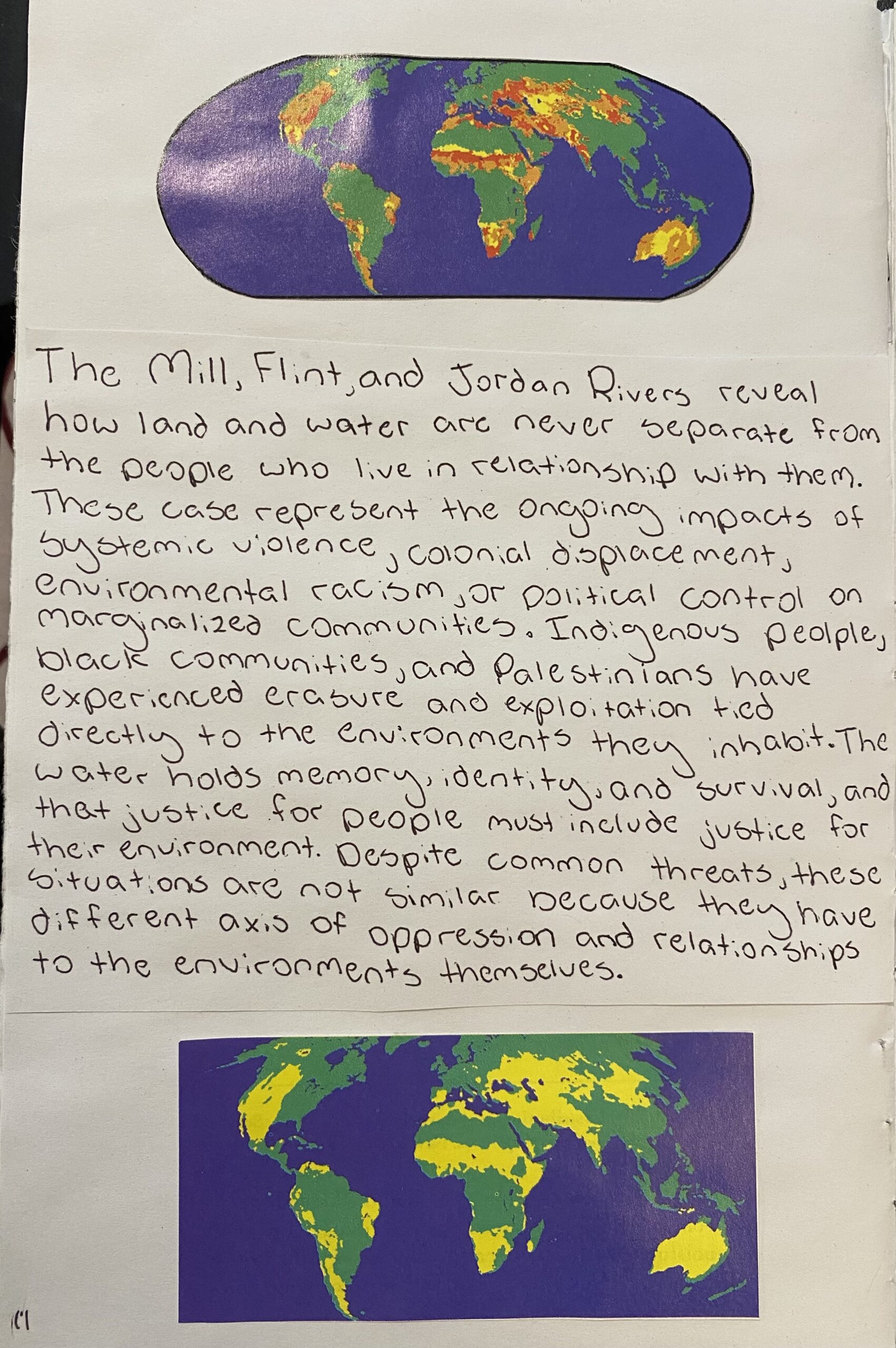
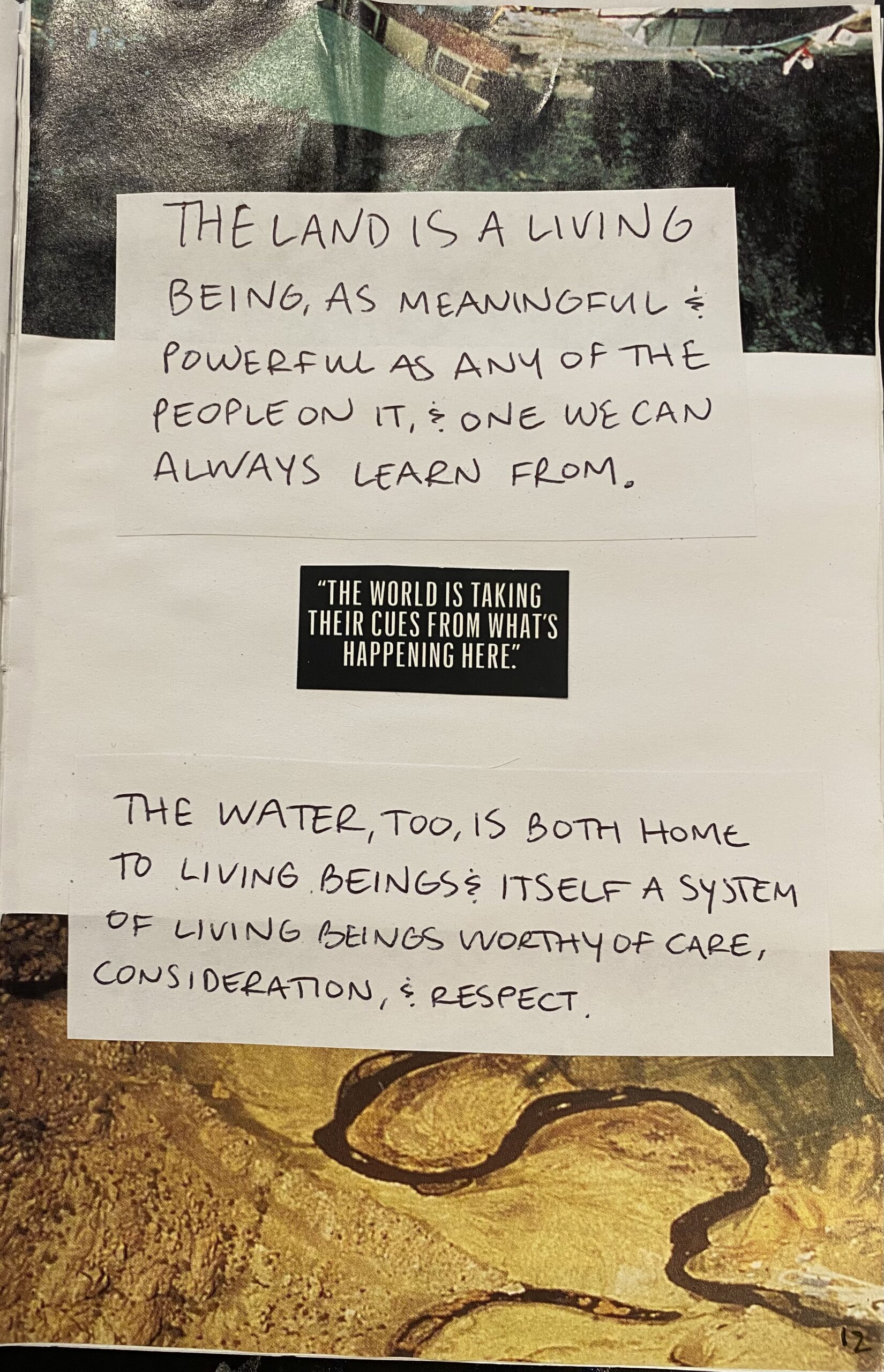
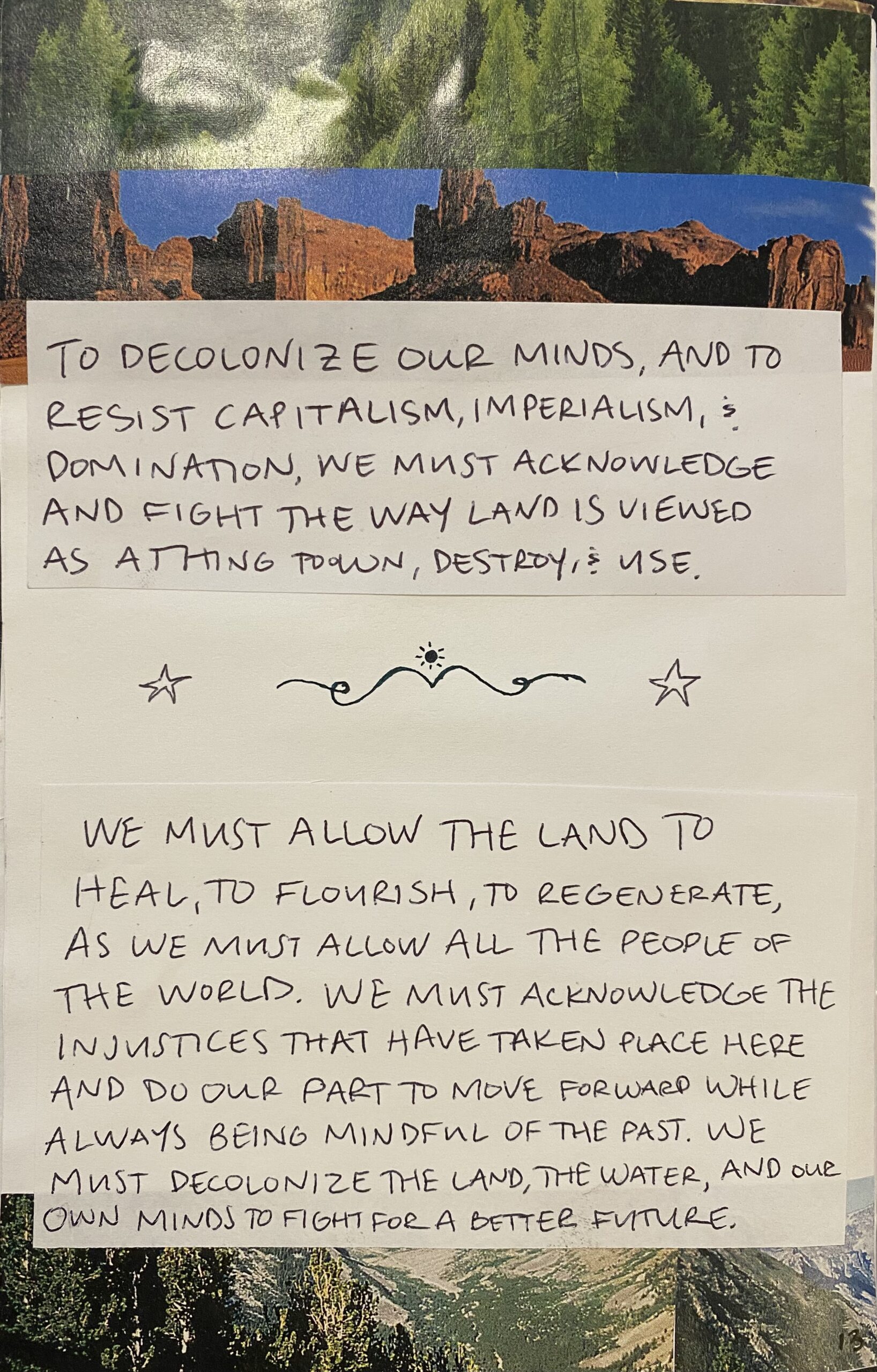
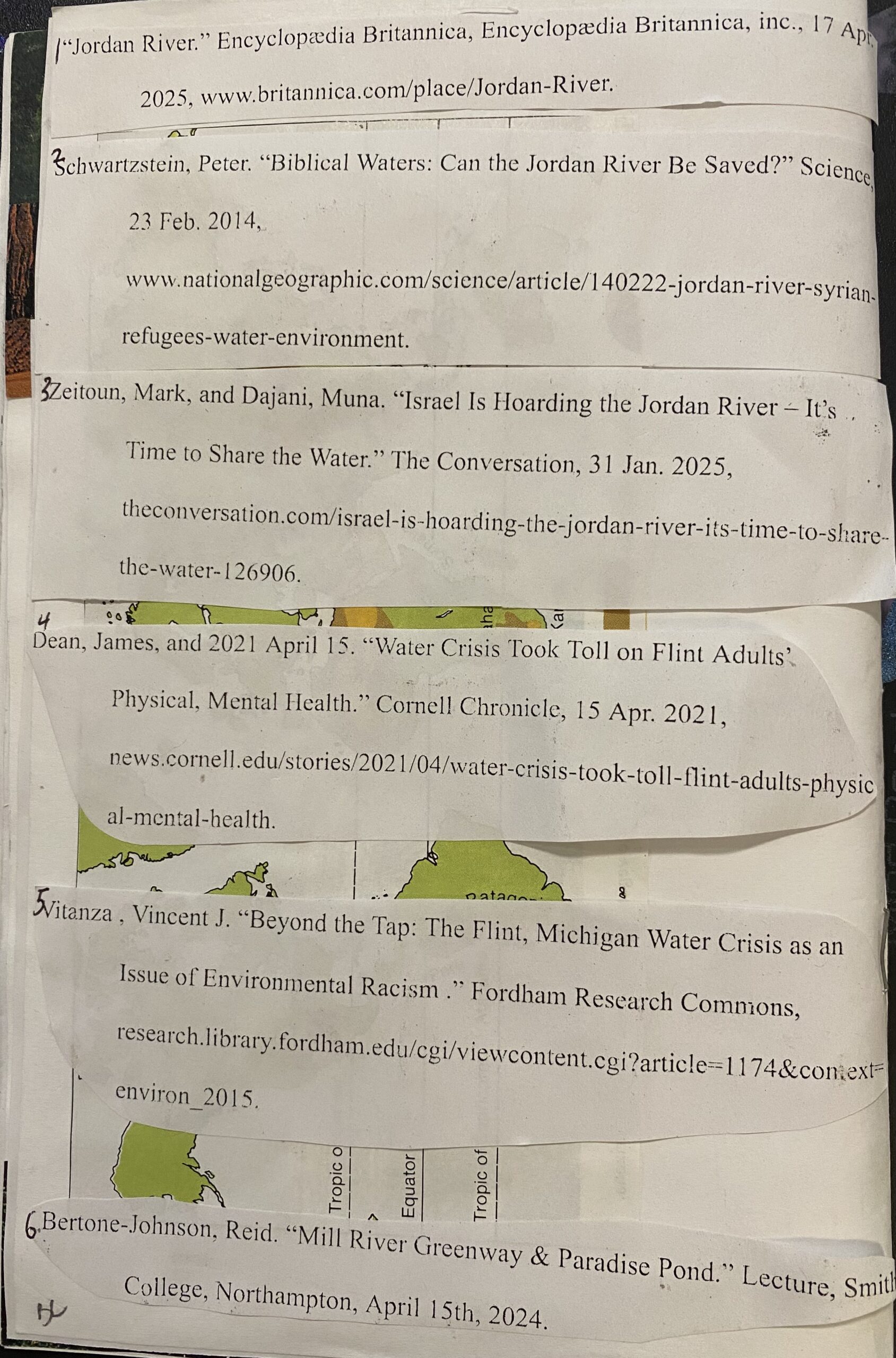
In Confluence, Amaia Mayberry, Iris Anderson, and Morgan Hamilton collaborate to imagine what it might mean to liberate the concept of intersectionality from an anthropocentric imagination. Their journey to “decolonize our minds” inspires them to grapple with the meanings of settler colonial genocide and erasure in ways that center our more-than-humans relatives. Through an analytical confluence of the processes that have impacted the Mill River, the Jordan River, and the Flint River, they recognize how “land and water are never separate from the people who live in relationship with them.” They name the systemic violence of colonial displacement, environmental racism, and political domination as processes that connect the struggles of Indigenous and Black peoples in the United States with those of Palestinians. If “water holds memory, identity, and survival,” how can justice for humans ever be separated from justice for the ecologies that hold and mold them? The healing, flourishing, and regeneration of land and humans are necessarily co-constitutive requirements in this struggle.